These books will be to supplement a
microbiology unit. In this unit
will cover bacteria and viruses.
These have shaped our history and they will continue to shape our
future. First students will need
to know anatomy of cells and viruses and the mechanisms that create
diseases. Then we will need to
emphasize that not all bacteria are and viruses are harmful to humans and that
there are a select few that are harmful.
The trade books contain much of the
same factual information that the students will learn in a textbook, but it is
delivered in a story telling way.
Students will be able to read this more readily rather than trying to read
a book that is focusing on just delivering facts and vocabulary words. The trade books also focus on the
social impact of disease and there fore will show students how the world of
cells and viruses have shaped our world.
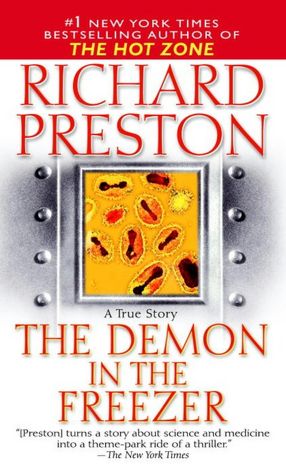
Demon in the Freezer
Smallpox is the only disease that has ever had a god as its
consequence. This books central theme is about biowarfare. It starts out describing the 2001 terrorist
attack of sending a letter to a US senator killing 5 people as a
consequence. The book lead into talking
about small pox because a major concern with the letter was that the Anthrax
was laced with smallpox, but it was not.
It talked about the history of small pox from the origination of a
transpecies jump to humans many years ago when agrarian life was first
established, the eradication of smallpox and to modern day experimentation with
it. The Eradication was talk about in great
depth and how they used a ring pattern of immunizations to stop the
spread. The modern perspective is the
about smallpox research and the individuals that wanted to research a more
effective and safer vaccination.
This is for
the students that are more science oriented.
It is a fascinating book that describes diseases in great detail.
Students will need to be introduced to some of the topics about disease and
viruses. This way a student will
understand what spores are and how they are formed. This book is a good supplemental reading for
students to read and incorporate into the learning of a subject. Instead of having the students regurgitate
the facts from the textbook they can use the context of the book for to support
their explanations.

Henrietta Lacks,
This is a documentary about Henrietta Lack, the women that
the famous HeLa cells came from. HeLa
cells are a type of cancer cell that has a growth pattern that is like no other
cell we have seen. They will continue to grow and divide as long as there are
nutriance and will not die. This makes them very important in the medical
research field. The book starts out of a
student that learned about where HeLa cells came from and from there on she
wanted to learn more about his women that no one knew anything about. We go on a journey with the author Rebecca
Skloot tracking down the Lacks family and her doctors. We find out that her cells were taken with
out her permission and the struggles and inequalities that happen to the
poor. This book takes place in the heart
of Baltimore and John Hopkins.
This book,
students will see things that they can connect with. It takes place in Baltimore and at John
Hopkins Hospital. This is the stories of
how just a few cells could shape science, as we know it. With out these cells we would not have most
of the cancer drugs and vaccines that we use to this day. Once we would start to cover cells and how
they divide we could start to read this book. Having the lesson cover how cells
reproduce and what cancer it, this book will give them a more personal aspect
to the lesson. It is always important for students to know how far we come. It
will not show the leaps and bounds the science community has improved with its
ethics, but still how much further we still have.
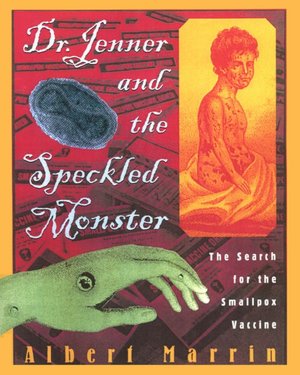
Dr. Jenner and the Speckled Monster
This book focuses on the history of the smallpox
disease. The book starts out talking
about the devastation that smallpox has had on many civilizations. It is the only disease that had gods named
after it. The “Speckled Monster” gives a
brief description on how the human smallpox arose. I talks about how we moved from hunters and
gatherers and how disease had a hard time taking a hold of a species until we
became agrarian and kept livestock in close quarters with us, this lead to a
virus jumping species. Then it talked
about Dr. Jenner, he was a surgeon, not a doctor, and was very studious about his
work. He met a milkmaid one day and she
gave him the idea of vaccinating people with cowpox to prevent smallpox. This was the start of his quest and it
worked. With his work we were able to
use this same technique to complete the eradication of the smallpox virus.
This book
is written at a lower level then the other two novels that were selected for
the microbiology lesson plan. I would
use this book with students that might not be reading on par with the grade
level. It will also be accessible to all
students in the classroom for another reference book. In the back it also lists some websites that
would be useful to use in the class, to show how to research material like
this.
Website 1, Anatomy of a cell
On this site there are pages for
every part of the cell. This has show
easy to read and understand diagrams and pictures. This site covers both animal and plant cell
parts, so this site would be a one stop visit with the cell basics.
Sometimes explanations in textbooks
are not as clear as students would like. This website is a great supplemental
reading to either use in class or have the students explore outside of class
for a further understanding of the subject. There are pages on this site that
give an in depth reading on the parts of a cell and also provide labeled
diagrams.
Website 2, Mitosis
This site
was designed by M. Davidson at the University of Florida for instructional
use. Here you can see all the phases of
cell division. These can all be seen in
one layer of an onion skin under a microscope.
There are pictures under each of the description of the phases. This provides a good understanding of what is
happening in the mitosis in a cell.
A good hands-on lab where students
get to see mitosis in progress is looking a layer of an onion. Most labs
have you draw out the stages of the cell in class and answer questions about
cell division. This would be a great reference before a test, so students
can compare their drawings and notes of the onion cells to actual pictures.
1. Preston, Richard. (2003). The Demon in the Freezer: A True Story. Random House Publishing Group.
2. Skloot, Rebecca. (2011). The Immortal Life of Henrietta Lacks. Crown Publishing Group.
3. Marrin, Albert. (2002). Dr Jenner and the Speckled Monster: The Search for the Smallpox Vaccine. Penguin Group (USA) Incorporated.
1. Preston, Richard. (2003). The Demon in the Freezer: A True Story. Random House Publishing Group.
2. Skloot, Rebecca. (2011). The Immortal Life of Henrietta Lacks. Crown Publishing Group.
3. Marrin, Albert. (2002). Dr Jenner and the Speckled Monster: The Search for the Smallpox Vaccine. Penguin Group (USA) Incorporated.
